
 By
·
3 minute read

What Is InvoiceNow?
Digital transformation has changed the way businesses manage accounting, payroll, and tax compliance. Yet for many companies, invoicing remains surprisingly manual.
Invoices are still commonly created as PDF files, emailed to customers, downloaded, and then manually entered into another accounting system. While this process is digital on the surface, it often involves repetitive administrative work that increases the risk of delays and human error.
InvoiceNow aims to solve this problem.
InvoiceNow is Singapore's nationwide e-invoicing network that enables businesses to send and receive invoice data directly between accounting or finance systems using the international Peppol standard. Instead of exchanging PDF documents, businesses exchange structured invoice data that compatible systems can process automatically.
As Singapore continues to accelerate digitalisation and the phased implementation of the GST InvoiceNow Requirement, understanding how InvoiceNow works is becoming increasingly important for businesses of all sizes.
Is InvoiceNow Accounting Software?
One of the most common misconceptions is that InvoiceNow is an accounting software.
It isn't. InvoiceNow is a secure digital network that connects different accounting and finance systems. Think of it like email.
Just as Gmail and Outlook can communicate with each other because they follow the same email standards, InvoiceNow allows different accounting systems to exchange invoice information because they use the same international Peppol standard.
This means businesses can continue using their preferred InvoiceNow-ready accounting or finance solution while still exchanging invoices with other businesses connected to the network.
How Does InvoiceNow Work?
Instead of sending an invoice as a PDF attachment, InvoiceNow transmits the invoice information directly between systems.
The process is straightforward:
- A business creates an invoice in its accounting or finance software.
- The invoice is transmitted through the InvoiceNow network.
- The recipient's finance system receives the invoice data.
- The invoice is reviewed and processed within the recipient's system.
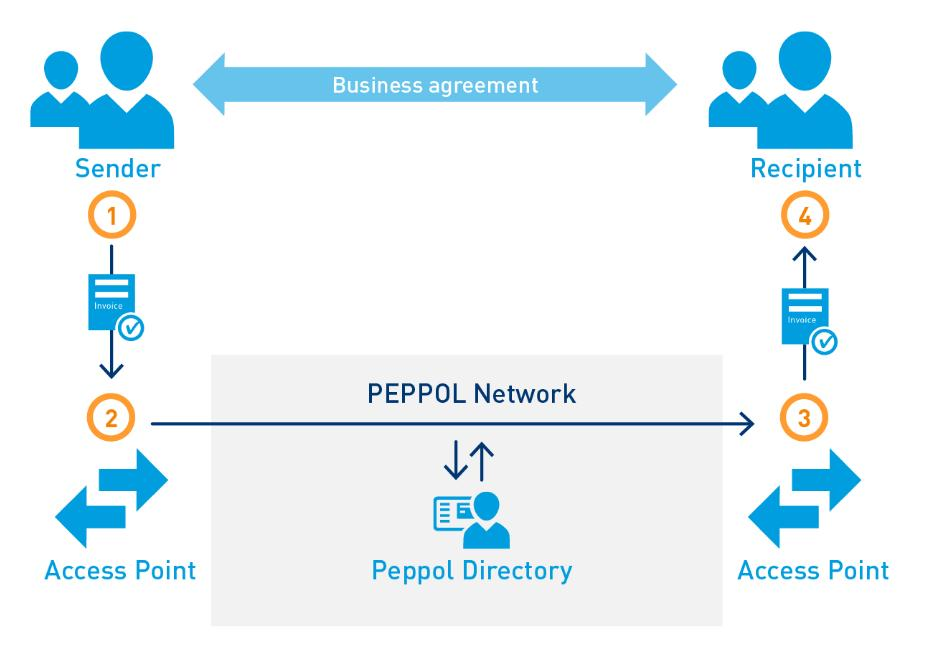
Because the invoice arrives as structured data rather than a document, there is less need for manual data entry and fewer opportunities for transcription errors.
InvoiceNow vs Traditional PDF Invoices
Many businesses assume emailing a PDF invoice is already e-invoicing.
There is an important difference.
|
Traditional PDF Invoice |
InvoiceNow |
|
Sent as an email attachment |
Sent through a secure digital network |
|
Requires manual processing |
Invoice data flows directly into compatible systems |
|
Greater risk of typing errors |
Reduced manual data entry |
|
Can be misplaced in email |
Delivered through a structured network |
|
Slower processing |
Faster invoice processing |
InvoiceNow focuses on exchanging invoice data, not simply digital documents.
Why Singapore Introduced InvoiceNow
InvoiceNow was introduced by the Infocomm Media Development Authority (IMDA) in 2019 to improve productivity, reduce business costs, and encourage digitalisation across Singapore's business community. It is built on the internationally recognised Peppol framework, enabling secure and standardised electronic invoicing between organisations.
Today, tens of thousands of businesses are connected to the network, and adoption continues to grow as the government expands the GST InvoiceNow Requirement.
Benefits of InvoiceNow for Businesses
- Improve Accuracy
Manual data entry increases the likelihood of mistakes, including:
- Incorrect invoice numbers
- Wrong GST amounts
- Duplicate invoices
- Incorrect supplier details
- Coding errors
Structured invoice data helps minimise these risks.
2. Faster Invoice Processing
Because invoices arrive directly within compatible finance systems, businesses can begin reviewing and approving invoices sooner, helping to reduce administrative delays.
3. Better Cash Flow ManagementFaster invoice processing can contribute to shorter payment cycles, improving cash flow for both suppliers and customers.
4. Support Business GrowthAs businesses scale, manually managing hundreds or thousands of invoices becomes increasingly inefficient. InvoiceNow enables organisations to automate more of their invoicing process while maintaining appropriate financial controls.
5. Reduce Manual Data EntryFinance teams spend less time re-entering invoice information from PDFs or paper documents.
Instead, invoice data can flow directly into compatible accounting systems.
Understanding the GST InvoiceNow Requirement
Beyond improving operational efficiency, InvoiceNow is becoming part of Singapore's tax compliance framework. Under the GST InvoiceNow Requirement, GST-registered businesses will progressively be required to transmit invoice data to IRAS through InvoiceNow-ready solutions. The rollout is being implemented in phases between 2025 and 2031.
The implementation timeline includes:
|
Implementation Date |
Businesses Affected |
|
1 November 2025 |
Newly incorporated companies that voluntarily register for GST within six months of incorporation |
|
1 April 2026 |
All businesses applying for voluntary GST registration |
|
1 April 2028 |
New compulsory GST registrants and existing GST businesses with annual supplies up to S$200,000 |
|
1 April 2029 |
Existing GST businesses with annual supplies up to S$1 million |
|
1 April 2030 |
Existing GST businesses with annual supplies up to S$4 million |
|
1 April 2031 |
Remaining GST-registered businesses |
Businesses are encouraged to prepare early rather than waiting until their mandatory implementation date.
How to Prepare for InvoiceNow
Preparing for InvoiceNow is not only about enabling a feature in your accounting software. It is also about ensuring your finance processes are ready for digital invoicing.
Consider the following steps:
- Review your accounting and invoicing workflows.
- Confirm that your accounting solution supports InvoiceNow.
- Register your business in the SG Peppol Directory.
- Obtain a Peppol ID.
- Review customer and supplier information for accuracy.
- Check GST settings and tax codes.
- Test the invoicing process before full implementation.
- Train finance staff on the updated workflow.
Common Questions About InvoiceNow
- Is InvoiceNow mandatory?
The GST InvoiceNow Requirement is being introduced progressively. Whether it applies to your business depends on your GST registration status and implementation timeline.
- Does InvoiceNow replace accounting software?
No. InvoiceNow works alongside compatible accounting or finance solutions by providing a secure network for exchanging invoice data.
- Can SMEs use InvoiceNow?
Yes. InvoiceNow is designed for businesses of all sizes, including startups and SMEs. IMDA and IRAS have also introduced support measures, including free InvoiceNow-ready solutions for eligible businesses and transitional funding for onboarding.